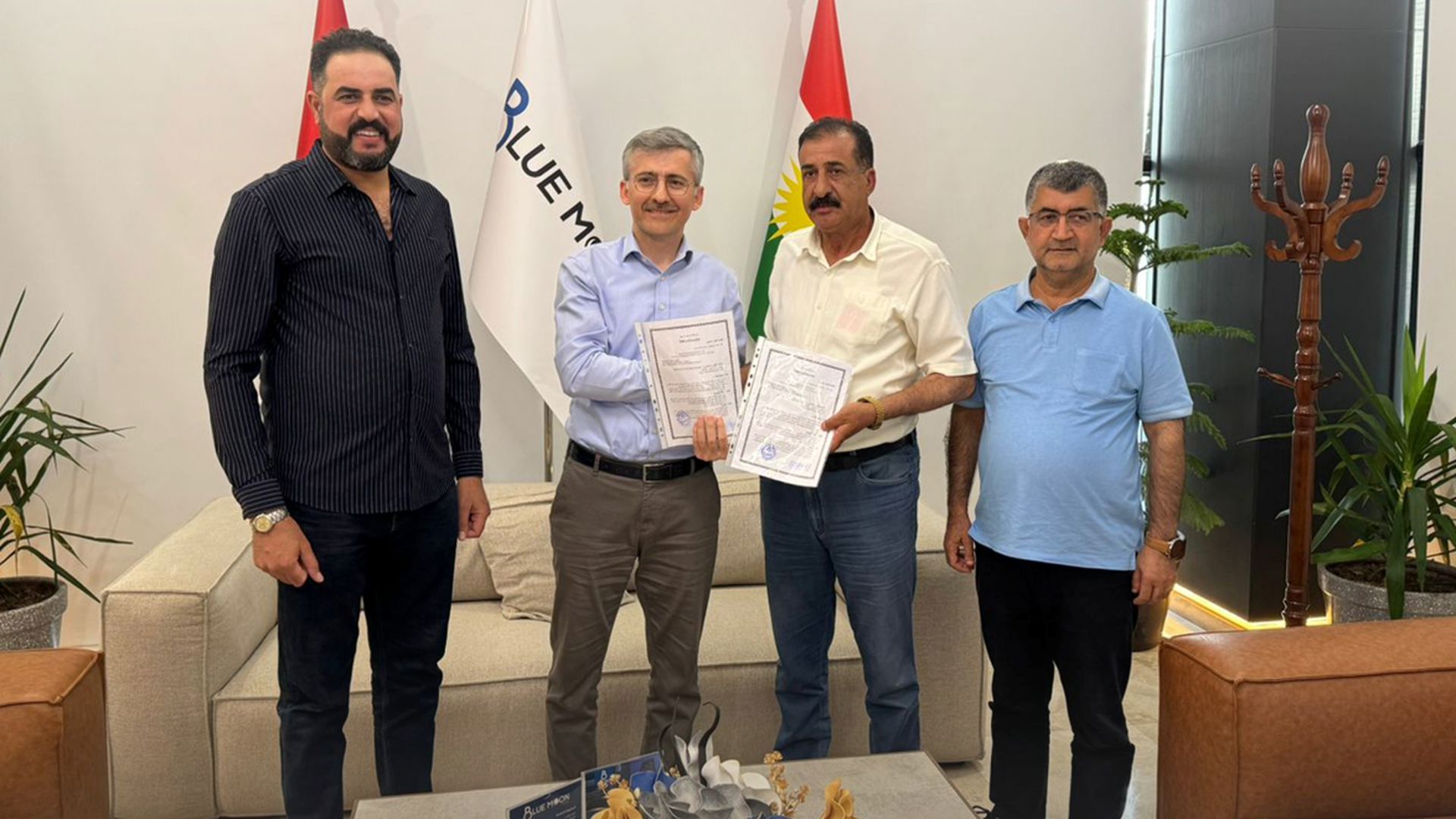
Imas – a leading Turkish manufacturer and turnkey solution provider in grain and feed milling technologies – reinforces its presence across the Middle East every day… After building the first flour mill project for Mokhalad Group in Iraq, Imas came together with its esteemed customer again to sign two new repeat order agreements.
Imas is establishing itself as a long-term project partner for Mokhalad Group’s investments in flour milling… Following the completion of the first 500 TPD flour mill project which has been operational since the end of 2024, Imas signed the second agreement with Mokhalad Group for a new 500 TPD flour mill on July 2025, and the third agreement for another 500 TPD flour mill on August 2025.
The total scale of all three projects built for Mokhalad Group represents approximately 500.000 tons of annual wheat processing capacity. And, these repeat orders demonstrate the confidence of Mokhalad Group in Imas regarding its manufacturing, engineering, and project management capabilities.
Both new projects within this scope are expected to be commissioned by the end of 2026.
Not Only Building Projects, Building ‘Trust’
Imas Sales and Marketing Director Muhammed Uzun: ‘First of all, we would like to extend our best wishes to Mokhalad Group for continuing success in their new ventures. As Imas team, we feel proud to be a part of our customer’s expansion plans, and hope to sustain our strong long-term partnership in their future investments.’
The First Commissioned Flour Mill Operating in Tikrit, Iraq
The project was built by Imas as Mokhalad’s first investment in flour milling. The 500 TPD flour mill in Tikrit, Salah Ad-Din region has been operational since the end of 2024, and features the latest automation technology.
The milling section of the plant was designed as two independent units, each with a capacity of 250 TPD to produce high-quality bakery and all-purpose flours for domestic consumption across the country. The flour mill is managed through an end-to-end automation system, from wheat intake to flour packaging. As well as a centralized process management, the fully integrated automation architecture offers enhanced transparency, advanced reporting, and remote connection features.